Papillary
Papillary thyroid cancer is the most common type of thyroid cancer making more than 90% of all thyroid cancers. It is more common in in women, and usually presents as a thyroid nodule or a slow growing neck mass with normal hormone levels. Lymph node metastasis is common in papillary thyroid cancer especially in younger patients and could be a presenting symptom. Overall survival in papillary thyroid cancer is excellent with >95% ten year survival rate.
Follicular thyroid cancer (FTC)
Incidence of follicular carcinoma in the United States is decreasing and it accounts for less than 10% of thyroid cancers. It is a disease presenting in persons over the age of 50, and is more common in women. Follicular carcinoma usually presents as a solitary nodule and can spread through the circulatory system to distant sites.
Hurthle cell thyroid cancer
It is considered to be a subtype of follicular cancer and some studies suggest higher rate of recurrence.
Medullary thyroid cancer
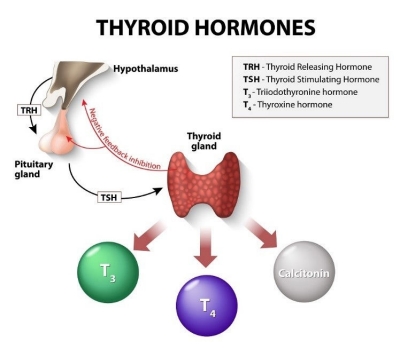
Medullary thyroid cancer (MTC) accounts for a small portion of thyroid cancers. It arises from the parafollicular or C-cells in the thyroid which produce the hormone calcitonin. This hormone functions to lower the blood levels of calcium. Patients with MTC usually have elevated levels of calcitonin and/or carcinoembryonic antigen (CEA). High level of these hormones is associated with systemic symptoms such as diarrhea.
Anaplastic /Poorly differentiated
Anaplastic thyroid cancer accounts for less than 1% of all thyroid cancer in the United States. As with other types of thyroid cancer, it is more common in women and presents at older age as a rapidly growing neck mass in the setting of goiter. Difficulty breathing or swallowing, and voice changes may also be present. Multimodal therapy including surgery should be considered when possible.
Other
Metastatic disease to the thyroid from other cancers such as kidneys, breast, lung and melanoma has been reported. Lymphoma can also occur in the thyroid on rare cases. It accounts for about 1-5% of thyroid malignancies and is known to grow rapidly.
Thyroid Surgery
Surgery for thyroid cancer
Surgery is the main treatment for thyroid cancer, except for some anaplastic thyroid cancers. If thyroid cancer is diagnosed, surgery to remove part or all of the thyroid gland is usually recommended.
Thyroid lobectomy
This operation may be used to treat different thyroid cancers (papillary or follicular) where the tumor is confined to the thyroid gland and there is no sign of spread beyond the gland. It may also be used as a diagnostic measure in place of a biopsy.
Some patients benefit from not needing to take thyroid hormone pills after surgery since part of the gland is left untouched. Additionally, there is no concern for hypoparathyroidism or low calcium levels since half the gland remains. It may limit interpretation of blood tests (thyroglobulin) used to monitor patients with thyroid cancer after surgery.
Total or near total thyroidectomy
Thyroidectomy is surgery to remove the thyroid gland. As with lobectomy, this is typically done through an incision across the front of the neck. This is the most common surgery for thyroid cancer. If the entire thyroid gland is removed, it is called a total thyroidectomy or near-total thyroidectomy.
After a thyroidectomy you may need additional treatment such as radioactive iodine. You will need to take daily thyroid hormone (levothyroxine) pills.
Lymph node removal
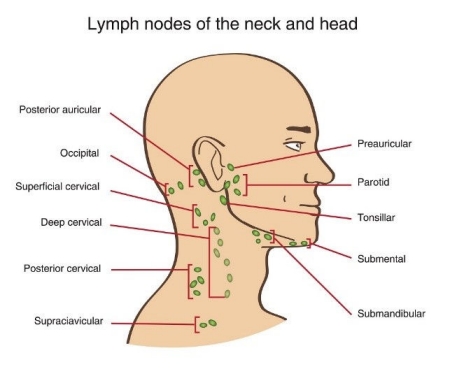
If cancer has spread to nearby lymph nodes in the neck, these will be removed at the same time surgery is done on the thyroid. Compartmental removal of the nodes in the central neck (near the thyroid) with or without lateral neck (side of the neck) is the treatment of choice.
Risks and side effects of surgery
Complications are less likely to happen when the operation is done by an experienced thyroid surgeon. Patients who have thyroid surgery often leave the hospital within a day following the operation. Patients with more extensive surgery such as neck dissection may stay longer at hospital. Potential complications of thyroid surgery include:
- Temporary or permanent hoarseness or loss of voice. This may also occur if the nerves to the vocal cord (recurrent laryngeal nerve) are damaged during surgery. Examination of vocal cords before or after surgery may be performed. Irritation to the trachea and larynx and irritation of the nerves may result in temporary hoarseness of voice.
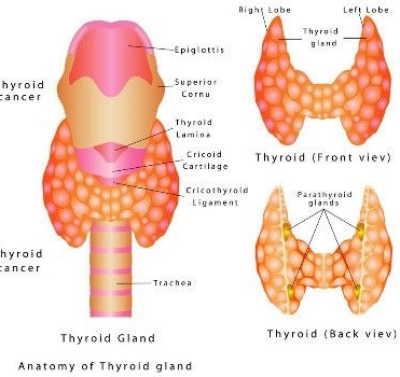
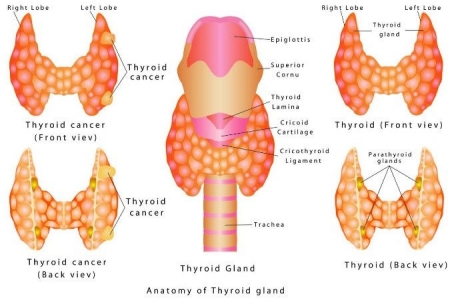
- Damage to the parathyroid glands (small glands near the thyroid that regulate blood calcium levels). This can lead to low blood calcium levels, causing numbness and tingling sensations around the mouth and fingertips and muscle spasms.
- Bleeding or formation of a large blood clot in the neck (hematoma).
- Wound infection.