What is Obesity?
According to the CDC (Centers for Disease Control and Prevention) obesity is defined as: a weight that is higher than what is considered healthy for a given height. And is considered a serious medical condition.
Why this is Important:
Obesity increasing your risk for weight related conditions such as:
- High blood pressure
- Diabetes
- Heart Disease
Obesity may also effect:
- Mobility
- Emotional well- being
- Social experiences
- Hormones
It is important to Remember:
- Obesity is a serious medical condition with serious consequences and is not your fault. It is influenced by genetics, hormones, lifestyle and psychological factors- not as simple as just willpower.
- You are not alone: Approximately 70% of the American population are overweight, with 1/3 considered obese. These rates are increasing yearly.
- There is hope! There are numerous treatment options available including: lifestyle changes, medications, and surgery.
Do I Have Obesity (BMI and Assessment)
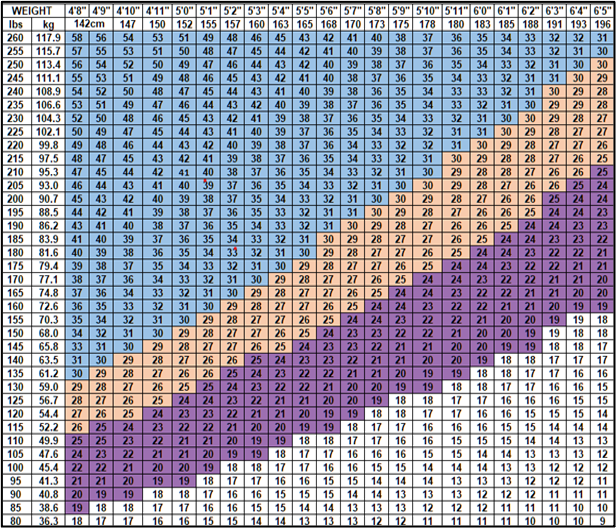
Body Mass Index or BMI is a tool used to estimate body weight based on height. This is one of the most commonly used tools to identify obesity. BMI is a simple way to evaluate whether your weight puts you at potential risk for serious health problems, other factors must also be considered. The chart below will help you identify which BMI category you fall into. Your health care provider can help you evaluate your BMI with other factors to determine your overall health picture.
Body Mass Index (BMI) Table for Adults
HEIGHT in feet / inches and centimeters
BMI CLASSIFICATION | |
Underweight | <18.5 |
Normal range | 18.5-24.9 |
Overweight | 25.0 – 29.9 |
Obesity | >30.0 |
Obesity class I | 30.0 – 34.9 |
Obesity class II | 35.0 – 39.9 |
Obesity class III | >40.0 |
Source: https://www.cdc.gov/obesity/
Important Note- BMI is a starting point for you and your health care provider. Other factors to consider include:
- Lifestyle Modifications
- Personal and family medical history
- Other health conditions
Health Risks Associated with Obesity
Being obese places you at risk for developing other series health problems, including:
- Cardiovascular & Metabolic
- Heart disease, CHF, chest pain
- High blood pressure
- High cholesterol
- Stroke
- Type 2 diabetes
- Irregular hormones, PCOS, and Infertility
- Respiratory & Sleep
- Asthma
- Sleep apnea
- Musculoskeletal
- Arthritis
- Back and joint pain
- Gout
- Skin infections
- Other Conditions
- Eating disorders
- GERD
- Gallstones
- Kidney stones
- Depression
- Increase surgical risk and post-surgical infection risk
- Pre-mature death
Age of onset of these conditions can occur younger in individuals with obesity.
Treatment Options
There are many evidence- based options to help manage obesity and lose weight. They include:
- Lifestyle changes (diet, exercise, behavior modification)
- Medications
- Bariatric (weight loss) surgery
Bariatric Surgery at John Muir Health
Our surgeries are considered minimally invasive. This means they are performed through small incisions, laparoscopically or robotically. What this means for you is a faster recovery, less pain, minimal scaring and faster return to normal bowel function and life.
How many procedures have we performed at John Muir?
Procedure | 2020 | 2021 | 2022 | 2023 | 2024 | 2025 | Totals |
Gastric Bypass | 32 | 40 | 54 | 46 | 47 | 37 | 256 |
Sleeve Gastrectomy | 106 | 169 | 240 | 261 | 213 | 175 | 1164 |
Revisions | 0 | 3 | 1 | 13 | 10 | 12 | 39 |
Totals | 148 | 212 | 295 | 320 | 271 | 224 | 1459 |
John Muir has a well-established and experienced Bariatric program.
We have performed over 3000 bariatric surgeries since 2002.
Bariatric Surgeries Performed at John Muir Health
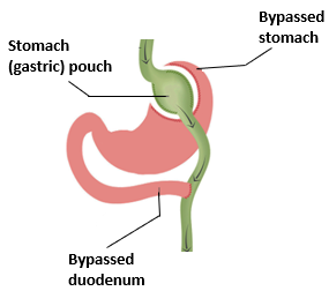
Gastric Bypass
- Creates a small stomach pouch
- Bypasses part of the intestines
- Results in restriction (small stomach) and malabsorption (bypassing some intestines)
- Can loose up to 60-80% of excess body weight
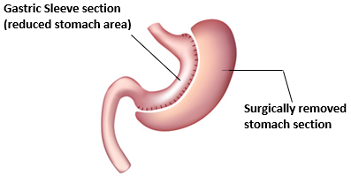
Sleeve Gastrectomy
- Surgical creation of a "sleeve" for stomach
- Removal of large portion (about 80%) of stomach
- Primarily limits food intake (restriction)
- Can loose between 50-70% exess body weight
Revision or Conversion
- For patients with prior bariatric surgery experiencing complications
- Convert from a sleeve to gastric bypass for further weight reduction
Risks vs. Benefits of Surgery
Bariatric surgery has strong results and has been proven to be an effective means to achieve sustainable weight loss. Excess weight loss seen with Gastric bypass is approximately 60-80%, and excess weight loss seen with Gastric sleeve is approximately 50-70%. Our patients can also see improvement or resolution of obesity- related conditions including:
- Type 2 diabetes
- High blood pressure
- High cholesterol
- Osteoarthritis/degenerative joint disease
- GERD
- Non-alcoholic fatty liver disease
- Asthma/Obstructive sleep apnea
- Depression
It is important to remember Bariatric surgery is a tool to help improve health and quality of life. Bariatric surgery is a major surgery, as with any surgery there are always risks. Ensure that you are discussing the risks and benefits with your surgeon to select the best option for you. You will review and sign a consent form confirming you understand the risks associated with bariatric surgery. You are encouraged to ask any question and discuss any concerns with your care team.
- Important: While we list common risks other complications may occur
Risks for All Bariatric Surgeries
Serious (but uncommon) Risks
- Death – Very rare (less than 0.5%)
- Major complications – Occur in about 4–5% of patients
Surgical Risks
- Bleeding – May require transfusion or additional surgery
- Blood clots – Can travel to the brain (stroke) or lungs- seek immediate care for chest pain, shortness of breath, or leg swelling.
- Because of this risk, we take preventative measures that include mechanical leg compression stockings, early ambulation, and blood thinners.
- Injury to organs – Including bowel, spleen, or blood vessels
- Leaks - Leak along surgical connection in stomach or intestines
- Stricture- narrowing, may cause difficulty eating
- Infection or hernia
- Anesthesia Complications
Medical & Long-Term Risks
- Vitamin deficiencies, anemia, or bone loss
- Lifelong vitamin supplementation is essential to avoid complications
- Changes in bowel habits
- Constipation, diarrhea, or gas
- Gallstones due to rapid weight loss
- Hair thinning or loss (usually temporary)
- Make sure to take vitamin supplements
- Depression
Procedure Specific Risks & Considerations
Gastric Bypass
Risks
- Marginal Ulcers
- Dumping syndrome- nausea, vomiting, diarrhea due to eating foods high in fat and sugar
- Bowel Obstruction- may require surgery
- Internal hernia- may require surgery
- Anemia
Considerations
- Vitamin and mineral deficiencies
- Longer operative times
- Possible higher complication rates
Benefits
- Excellent weight loss and resolution of weight related conditions
- Durable results
Sleeve Gastrectomy
Risks
- GERD (acid reflux)
- Nausea and vomiting
- Ulcers- can cause bleeding
- Difficulty swallowing
Considerations
- Permanent
Benefits
- No anastamoses (Connections)
- No rerouting
- Gut hormone changes
- Normal nutrient absorption
Each patient is different and must be independently evaluated and managed, actual weight loss will vary.
Important notes and considerations:
- It is important to avoid smoking and anti-inflammatory medications such as ibuprofen and naproxen after weight loss surgery due to increased risk of ulcers and bleeding.
- Fertility may increase after weight loss surgery
- Avoid pregnancy until cleared by your care team, typically at least 1.5 years post-op
- Depression and emotional changes can occur
- Please reach out to your provider if you are struggling
Am I a Good Candidate for Surgery
To qualify for bariatric surgery you must meet the following criteria:
Qualify for surgery
- Age 18 or older
- BMI >40 OR
- BMI >35 with obestiy-related conditions (diabetes type 2, hypertension, sleep apnea)
- Have tried medical weight loss programs unsuccessfully
- Complete psycological evaluation
- Commit to long-term lifestyle changes
- Commit to long-term follow up
Do NOT qualify for surgery
- Active smoking, alcohol or substance use
- Serious medical conditions including: heart failure, liver failure/ cirrhosis, pulmonary hypertension, emphysema
- Unable to commit to long-term lifestyle changes
- Unable to commit to long-term follow up
In some cases, a BMI of 30-34.9 can be considered if the patient meets specific criteria set by the National Institutes of Health (NIH). Insurance dependent.
Ways to Maximize Success after Bariatric Surgery
Remember these daily habits will help you heal, avoid complications, and maximize the benefits from surgery.
Nutrition
- Mindful eating
- Chew food well
- Meals should take 20-30 minutes
- Take small bites
- Limit Fats and Sugars
- Fiber will help with constipation
Hydration
- 64 Oz of fluid every day
- Small sips throughout day
- Calorie free, sugar free fluids
Activity
- Walk at least 4-5 times a day
- Increase activity as you get stronger
- Goal is combination of cardio and weight training, 150 min a week
Vitamin Supplementation
- Vitamin supplementation is Lifelong
- Essential to avoid vitamin and mineral deficiencies
- Seperate your multivitamin and Calcium by 2 hours
What to Expect After Bariatric Surgery
These tips and tricks are designed to help you recover safely and reduce your risk of complications after surgery. Remember recovery is a process. Following your care plan and surgeon advice will help you heal safer, faster and optimize results.
Hospital Stay
- Most patients stay one night in the hospital and discharge home the next day
Activity & Movement
- Walking is VERY important after surgery
- Helps prevent blood clots and pneumonia
- You will be walking within 3 hours of arrival to your room after surgery
- Walk 4–5 times per day when you get home
- As you feel stronger, add light to moderate exercise
- Long-term goal:
- 150 minutes of exercise per week
Diet Progression
Your diet will progress through Stages 1-4 as your body heals. Your surgeon will guide you on timing to advance your diet. DO NOT advance your diet without surgeon approval.
Diet Stages:
- Full Liquid Diet (Stage 2)- Leave hospital on this stage
- Foods you cannot see through
- Examples: strained soups, protein shakes, yogurt
- Soft Diet (Stage 3)
- Easy-to-chew foods
- Examples: eggs, beans, soft fish
- Can include blended/pureed foods (applesauce-like texture)
- Regular Diet (Stage 4)
- Gradual return to normal food textures
- Go SLOW
Important Nutrition Tips:
- Focus on high-protein foods
- Limit sugar and simple carbs (bread, pasta, rice)
- Please refer to your nutrition packet for exact details
Vitamins & Supplements
- Take your bariatric vitamins daily
- Options may include:
- All-in-one bariatric vitamin supplements
- Or separate vitamins:
- Multivitamin
- Vitamin B12
- Vitamin D
- Calcium
Remember do not take multivitamin with iron at the same time as Calcium- separate by 2 hours
Follow-Up Care
- Timeline to see your surgeon after surgery
- 2 weeks, 3-6 month, annually- you will have labs drawn for these appointments
- Follow up with dietitian as needed
Medications after Surgery
You may be prescribed:
- Pain medication – for comfort as needed
- Nausea medication – As needed
- Acid-reducing medication – to protect your stomach
- Stool softener – to prevent constipation
If you develop severe abdominal pain, vomiting, fever, fast heart rate, or shortness of breath, please call your surgeon immediately and/or go to the nearest emergency room.
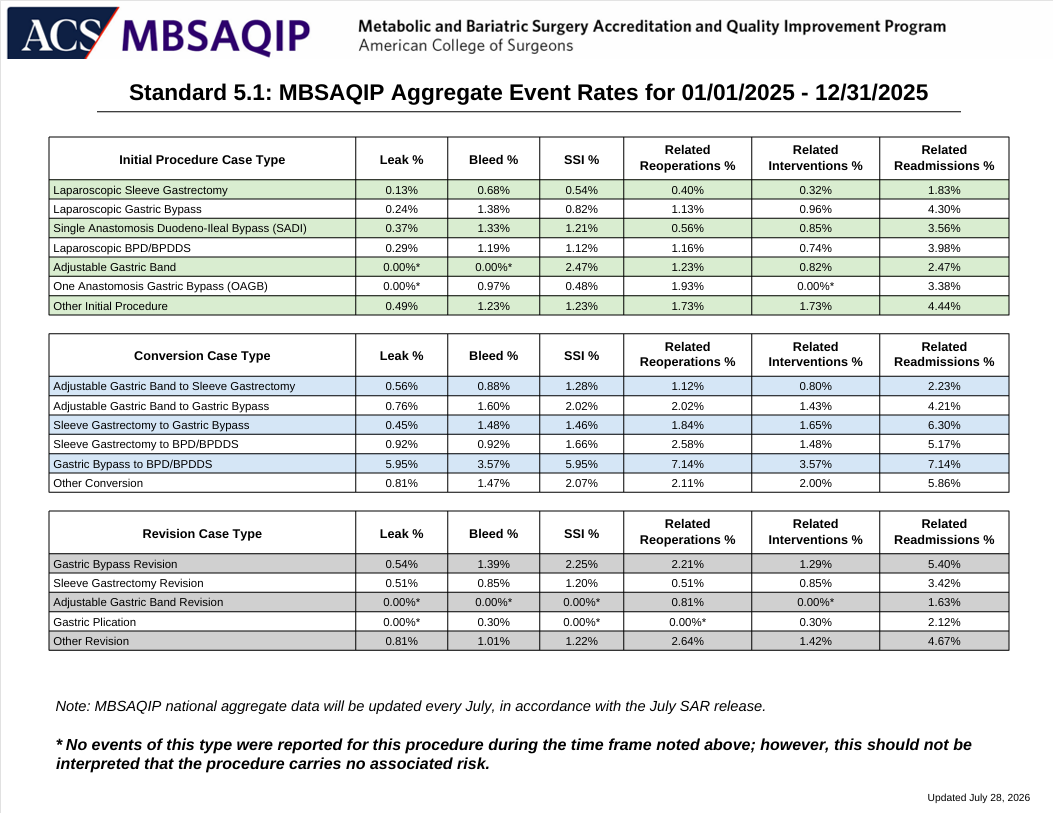
Aggregate Data Chart
Brethauer, Chand, Schauer, “Risks and benefits of bariatric surgery: Current evidence.” Cleveland Clinic Journal of Medicine, November 2006, 73 (1) 993-1007.
Centers for Disease and Prevention, https://www.cdc.gov/obesity/.
Chang, Stoll, Song and all, “The effectiveness and risks of bariatric surgery: an updated systematic review and meta-analysis 2003-2012,” JAMA Surg,m 2014 Mar; 149(3)L275-87.
National Institutes for Health, https://www.nhlbi.nih.gov/sites/default/files/media/docs/obesity-evidence-review.pdf.
Schauer, Bhatt, Kirwan and all, “Bariatric Surgery versus Intensive Medical Therapy for Diabetes—3-Year Outcomes.” N Engl J Med 2014; 370:2002-2013.
Sjostrom, Lindroos, Peltonen and all, “Lifestyle, Diabetes and Cardiovascular Risk Factors 10 Years after Bariatric Surgery.” N Eng J Med 2004: 351:2683-2693.